


Application of the Meat Vacuum Tumbler:
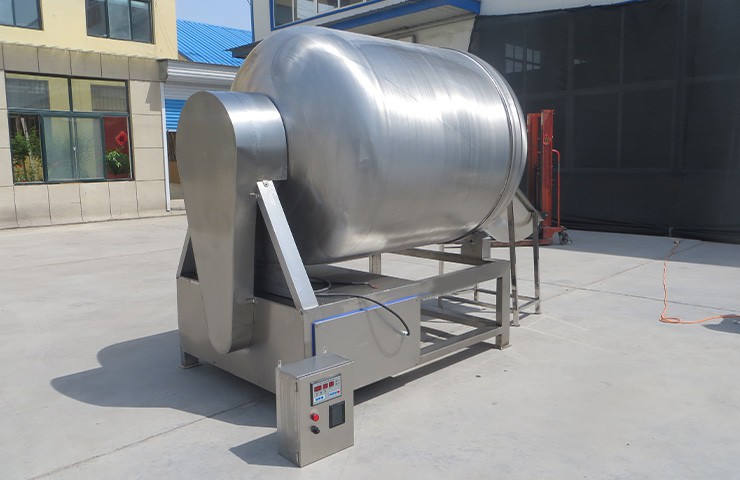
The Meat Vacuum Tumbler is used in the production of various meat products, including beef, pork, chicken, and fish. The machine is commonly used to mix, tenderize, and marinate meat products.
Beef:
The Meat Vacuum Tumbler can be used to tenderize beef cuts such as sirloin, chuck, and brisket. It is also used to marinate beef products, such as steaks and roasts, to enhance their flavor and aroma.
Pork:
The Meat Vacuum Tumbler can be used to tenderize pork products such as chops and loin. It is also used to marinate pork products such as ham and bacon.
Poultry:
The Meat Vacuum Tumbler can be used to marinate poultry products such as chicken and turkey. It is also used to tenderize these products, making them juicier and more flavorful.
Fish:
The Meat Vacuum Tumbler can be used to marinate and tenderize fish products such as salmon and tilapia. It is also used to enhance the flavor of fish products.
Advantages of the Meat Vacuum Tumbler:
Faster Processing:
The Meat Vacuum Tumbler is designed to maximize efficiency and reduce the processing time. It can process larger quantities of meat products in a shorter period.
01
Improved Meat Quality:
The Meat Vacuum Tumbler tenderizes the meat, making it more tender, juicy, and flavorful. It also enhances the texture and appearance of the meat, making it more visually appealing.
02
Consistent Quality:
The Meat Vacuum Tumbler ensures that the meat is marinated and seasoned evenly, resulting in consistent quality.
03
Reduced Labor Costs:
The Meat Vacuum Tumbler eliminates the need for manual meat tenderization and marination, reducing labor costs significantly.
04
Reduced Product Waste:
The Meat Vacuum Tumbler reduces product waste by ensuring that the meat is evenly marinated and tenderized, eliminating the need to discard parts of the meat due to uneven processing.
05
Working Principle of the Meat Vacuum Tumbler:
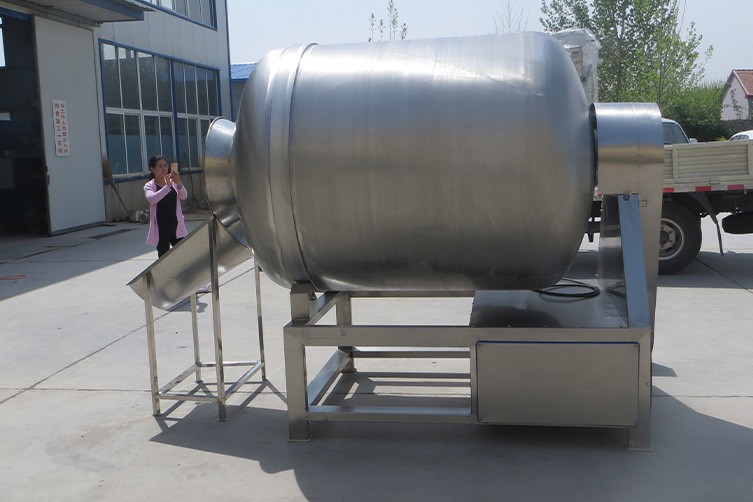
The Meat Vacuum Tumbler works by using a vacuum to create pressure inside the machine, which then forces the meat to tumble around in the drum. The machine's drum is lined with stainless steel paddles that pound the meat, breaking down the muscle fibers and tenderizing the meat. During the tumbling process, the meat is also exposed to the vacuum, which allows the marinade or seasoning to penetrate the meat more effectively.
How to Operate the Meat Vacuum Tumbler
1
The first step is to load the meat into the drum, ensuring that there is enough space for the meat to tumble around freely.
2
Once the meat is loaded, the next step is to add the marinade or seasoning. The marinade/seasoning should be added according to the manufacturer's instructions.
3
After adding the marinade/seasoning, the lid should be closed securely to ensure that there is no leakage during the tumbling process.
4
The timer should be set according to the manufacturer's instructions. This will vary depending on the type and quantity of meat being processed.
5
The Machine should be turned on, and the vacuum should be engaged to create pressure inside the drum.
6
During the tumbling process, it is important to monitor the machine to ensure that there are no leaks or failures. If any problems occur, the machine should be turned off immediately and checked for repairs.
7
Once the tumbling process is complete, the machine should be turned off, and the lid should be opened carefully.
Conclusion
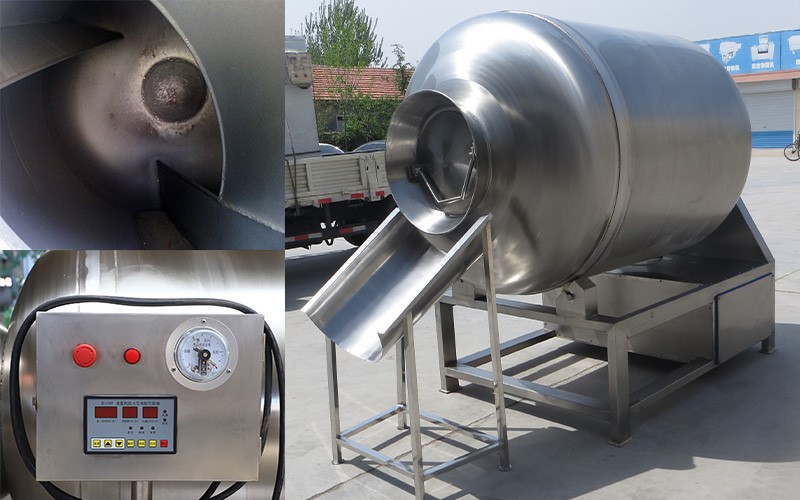
The Meat Vacuum Tumbler is an essential machine used in the meat processing industry. It offers a range of benefits, including faster processing, improved meat quality, consistent quality, reduced labor costs, and reduced product waste.
The machine is simple to operate, but it is important to follow the manufacturer's instructions carefully to ensure that the equipment is used safely and efficiently. With the Meat Vacuum Tumbler, the meat processing industry can meet the demands of consumers for safe, healthy, and delicious meat products.
FAQ
Q: What's the MOQ?
Q: Can the machine be customized?
Q: What's the payment term?
Q: How to ship?
Q: Which port do you send the goods from?
Q: How long is the warranty of the machine?
Q: How to buy this machine?
Q: What about the package?
Q: Do you need a supplier to provide transportation?
Q: Are there any requirements for power supply?
Q: What about Pre-sale service:
Q: What about After-sales service?


