Types of Smoke oven
Smoke oven have been around for over a decade, from their initial development to widespread use.
Through continuous improvement by experts and the integration of domestic and international technologies, they now offer steaming, drying, baking, smoking, and coloring functions, while also offering excellent energy efficiency. Smoking, with its long history both domestically and internationally, refers to the process of smoking using volatile substances produced by the incomplete combustion of wood.
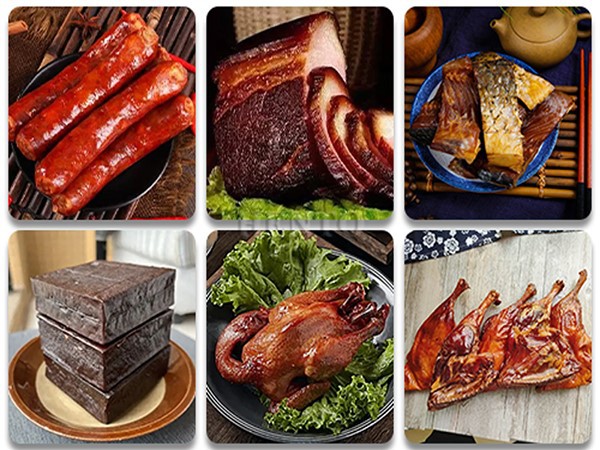
The purpose of smoking meat products is to dehydrate them and enhance their unique flavor. It also improves the color of the meat and has certain antibacterial and anti-oxidant properties, extending the shelf life of the meat. Our smokers are available in steam and electric heating options, allowing customers to choose according to their needs.
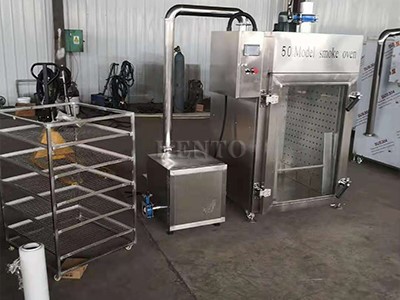
The smoker utilizes heat generated by the electric heating tubes within the furnace and smoke generated by the blower to generate smoke. This ensures consistent flavor and color from batch to batch. A variety of models are available to choose from, ensuring you have the ideal equipment. Simulated ambient temperature circulating air, special isolation devices, and high-quality design ensure peace of mind for every customer.
Functions of Smoke Oven
Steaming Function:
To achieve this, an external steam generator is required. The steam generator can be heated electrically, with gas, or with coal gas. The steam generated enters the furnace through a steam pipe, achieving the steaming function. Steaming: Steaming requires a steam generator or industrial boiler. Smokers in the 30-100 kW range can be powered by a steam generator, while those in the 100 kW range or larger must be equipped with a boiler. Steam generators can be heated with electricity, natural gas, or coal gas (electric steam generators have a power output of 18 kW; the other two heating methods are recommended). Steaming involves directly introducing steam into the smoker.
Drying:
Electric heating drying: Electricity heats the heating tubes, which dissipate heat. The motor drives an axial flow fan to absorb the heat, which is then removed by a Liuzhou blower. The heat circulates throughout the oven via a deflector plate (small) or a deflector tube (large), achieving drying.
Steam heating and drying: Steam heats the copper coil (copper coils are meaningless without steam source). The copper coil dissipates heat, and the motor drives the axial flow fan to absorb the heat back, and then the axial flow fan throws the heat out. The heat circulates in the entire furnace through the guide plate (small) or the guide tube (large), thereby achieving drying (in the process of steam heating the copper coil again, the steam will turn into condensed water, and the condensed water will be discharged through the steam trap).
Smoking:
Built-in smoking: Mix the smoking material and sugar in an appropriate proportion and add it to the built-in smoking box. Set the appropriate smoking time and smoking temperature on the control panel. The smoking material is heated by the electric heating tube to incompletely burn. Under the action of the axial flow motor driving the fan to reverse the flow, the volatile substances produced by the incomplete combustion of the smoking material are evenly distributed in the furnace, and the food is smoked and colored.
External smoke generation: The smoke generation process is similar to internal smoke generation, but compared with internal smoke generation, external smoke generation has the advantage of being able to freely control the size and concentration of smoke. In addition, after the smoke enters the flue through the action of the blower, it is filtered before entering the furnace body, which greatly reduces the content of 3,4-phenylpropane in the smoke.
Smoking:

When salmon is cold smoked, the temperature in the furnace reaches 0-30℃ under the drive of the compressor, and the smoke generation chamber generates smoke normally. Note: Smoking wood is generally beech, birch, oak, and apple trees. In some areas, rice bran, tea leaves, or Chinese medicine, tangerine peel, etc. are also used. Pine, elm, peach, and apricot wood have high resin content and will produce black smoke; persimmon trees and mulberry trees produce odors and are not suitable for use as smoking wood. 4. Coloring: The smoking process also colors the wood. If you want to smoke it to light yellow, use sawdust and white sugar. If you want to smoke it to brown, use sawdust and brown sugar. The depth of color can be determined by the sugar content. Smoking Oven Equipment Structure and Accessories.
Contact now
Equipment structure and accessories function
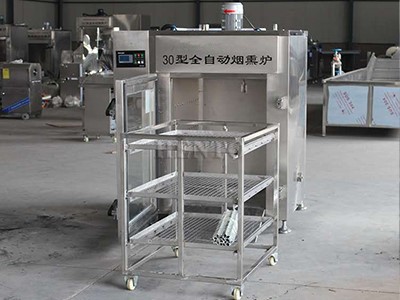
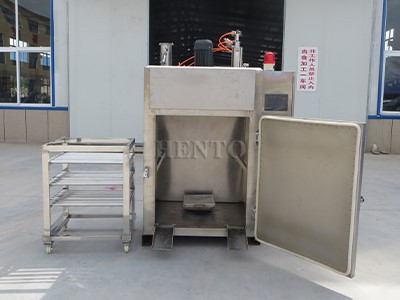
Oven Body:The oven body is where the smoking, coloring, steaming, cooking, and drying process takes place. It houses a fan and copper coils on top. Driven by an axial-flow motor, the fan draws in hot air and smoke, dispersing it evenly. The copper coils are used for drying. Steam enters the coils through a steam port. Copper has excellent thermal conductivity and rapid heat transfer, increasing the contact area for faster heating and energy efficiency. Electric heating elements are located on both sides of the oven for rapid heating and uniform heating. Two temperature probes, one for measuring the oven temperature and the other for measuring the food temperature, help us visually assess the product's cooking state. Independent flues are located on both sides of the oven. The upper part features exhaust and smoke vents, and the side features dedicated steam convection vents. These ensure consistent temperature and smoke throughout the oven, preventing temperature discrepancies and inconsistent smoke color. A drain outlet is located at the bottom of the oven to remove condensation caused by cold steam. The furnace body features a large window made of 8-inch thick tempered glass with a special explosion-proof film, allowing for clear observation of the product processing process and prompt troubleshooting, ensuring safety and reliability.
Control Box:Fully automated with a computer.The smoker features a PLC control panel, allowing for settings such as drying time and temperature, smoking time and temperature, the operating time of the smoke-generating electric heating tube, and shortcut keys for controlling the smoke volume in the smoke chamber, making operation simple and easy. The large-screen human-machine interface displays various parameters simultaneously for monitoring operating status, enabling remote control, printing of recipes, temperature, humidity, and permissions, and storage of up to 100 process recipes. Operations involve adjusting the set temperature and time. The Start button is used to shift settings during setup. When wiring the control box, pay attention to the positive and negative poles. Connecting the wrong wires will cause the motor to reverse and generate noise. Reversing the wires can correct this problem.
Smoke Chamber:The internal smoke chamber uses a smoke box. The external smoke chamber consists of a hopper and a smoke chamber, allowing for control of smoke volume and concentration. A convection valve on the side of the smoke chamber controls the smoke generation speed. A stirring scale inside the hopper ensures even mixing of the smoke material. Below the hopper is a receiving tray, which adjusts the distance between the tray and the hopper to adjust the smoke concentration. The greater the distance between the receiving tray and the hopper, the higher the smoke concentration. The smoke chamber also contains a stirring tank, which evenly distributes the smoke material over the electric heating element. The speed of the stirring tank can be controlled to control the smoke volume. A filter plate is installed in the pipe connecting the smoke chamber to the furnace body to effectively prevent tar and small smoke particles from entering the furnace.
Functions of Various Accessories:Insulation: High-temperature-resistant polyurethane foam is used for insulation, providing excellent insulation, rapid heating, and resource conservation.
The fan on the main unit uses a two-speed axial flow fan with a forward and reverse suction method, efficiently and effectively distributing intake, exhaust, and supply air, maximizing air circulation within the chamber.
The reducer on the smoke chamber drives the mixing spoon to release the material. A tray underneath adjusts the amount of wood chips released.
The butterfly valve on the blower controls the amount of smoke entering.
The top of the furnace features an inverted trapezoidal shape, allowing oil and dirt to drain away.
The impeller uses a forward and reverse suction method, ensuring uniform and efficient drying and smoking of the product within the furnace.
The independent flue ensures consistent temperature and color throughout the furnace.
The filter effectively prevents small solid particles, tar, and other harmful substances produced during smoking from adhering to the product surface.
The smoke-generating electric heating tube is disc-shaped, increasing the smoke-generating area and speed.
The temperature probe more conveniently monitors the product's curing status.
Drain: Promptly remove small water droplets formed by condensation of steam inside the furnace to prevent them from affecting product processing.
Convection valve: Adjustable in size. The convection valve on the furnace body accelerates the exhaust of smoke after processing, saving time and improving efficiency. The convection valve in the smoke chamber controls the speed of smoke generation.
Adjustable support legs and wheels: Adjustable support legs eliminate the problem of unstable positioning of the equipment due to uneven floors; wheels provide convenience and effort.
Dual circulation system: Internal circulation in the smoke chamber is combined with external circulation in the smoke chamber and smoke furnace, resulting in more complete smoke, more uniform coloring, less material consumption, and greater environmental protection.
Do you want a smoke oven?
If your restaurant or canteen is making smoked sausages or cold-smoked salmon, you can buy a smoker that can help you make a variety of delicacies.
What are you waiting for? Start your inquiry now.