


What is the definition of arc spraying?
Arc spraying comes in various forms, including powder, wire, strip, and rod, and its composition includes metals, alloys, ceramics, cermets, and plastics. Powder materials play a significant role, with over a hundred types. Wires and strips are mostly metals or alloys (composite wires may also contain ceramics or plastics); rods only come in a dozen or so varieties, mostly oxide ceramics.
Arc spraying materials are generally wires, such as zinc wire, aluminum wire, aluminum alloy wire (Ac aluminum, AS aluminum), copper wire, etc. Powder materials are mainly used for flame spraying.
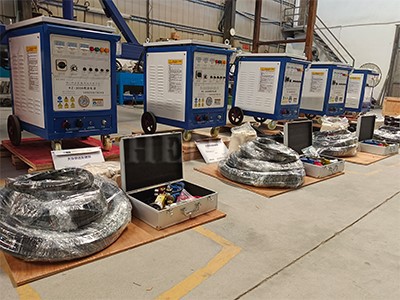
Arc spraying machine is widely used in industry.
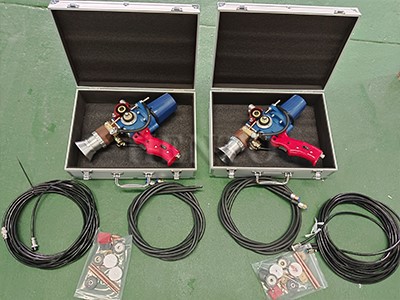
Arc spraying utilizes an electric arc burning between two continuously fed metal wires to melt metal, atomize the molten metal using a high-speed airflow, and accelerate the atomized metal particles toward the workpiece to form a coating.
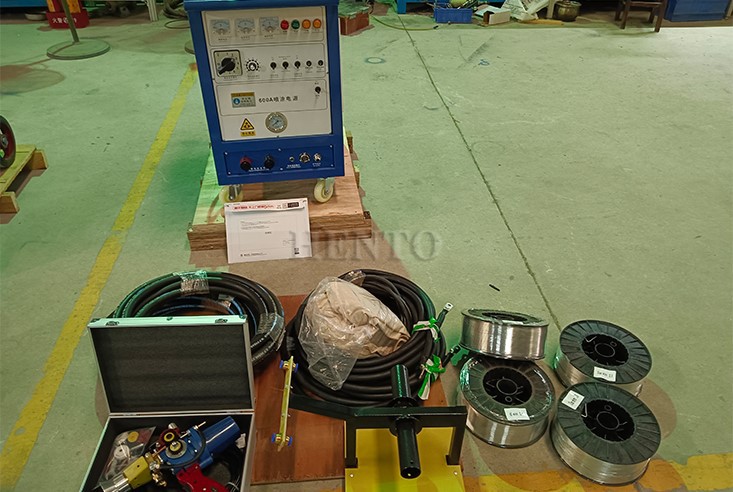
Arc spraying is the most commonly used thermal spraying method in practical applications such as corrosion and wear protection for steel structures and mechanical parts repair. An arc spray system generally consists of a dedicated power supply, control device, arc spray gun, wire feeder, and compressed air supply system.
Contact now
What are the specific applications of ARC spraying machine?
ARC spraying machine use an arc ignited between two metal wires being sprayed to create heat, melting the wires. A high-speed cyclone atomizes the molten metal into particles, and the atomized particles are then accelerated. What are the specific applications of zinc spraying machines?
High cost-effectiveness, resulting in a smooth, fine-grained coating with no brush marks. The pressurized spray atomizes the paint into tiny particles, distributing them evenly across the wall surface. This creates a smooth, smooth, and fine coating, without brush or roller marks, a feat unmatched by traditional methods like brushing and rollers.
High spraying efficiency. A single operator can spray 200-500 square meters per hour, 10-15 times that of manual painting.
Excellent adhesion and long coating life. It uses high-pressure spraying to impart powerful mechanical energy to atomized paint particles. This energy penetrates the pores, creating a finer paint film. This in turn increases the mechanical adhesion between the paint film and the wall, improving coating adhesion and effectively extending the coating's lifespan.
The paint film thickness is uniform, resulting in high paint utilization. Artificial brush rollers produce extremely uneven film thickness, typically ranging from 30-250μm, resulting in low paint utilization. Airless spraying, on the other hand, easily achieves a coating thickness of 30μm.
It easily reaches wide and open areas. Because it uses high-pressure airless spraying, the paint sprayer is gas-free, making it easier to reach wide and open areas, gaps, and uneven, difficult-to-paint surfaces. This makes it particularly suitable for office ceilings with numerous air conditioning and fire ducts, which are difficult to apply with rollers.
It can spray low-viscosity paints, and both hand brushes and air sprays are suitable for high-viscosity paints. Following the development trend of the economy and the change of everyone's consciousness, it has become a fashion in China to use high- and medium-end interior wall paints instead of floor tiles to decorate walls.


